


Royal Solitaire
4.6164.00 Reviews
App Specs
- Version
- 2.20.1
- Updated On
- License
- Free
- Downloads
- 1,000,000+
- Developer
- Small ant limited
- Categories
- Card
- Platform
- Android, iOS
Screenshots
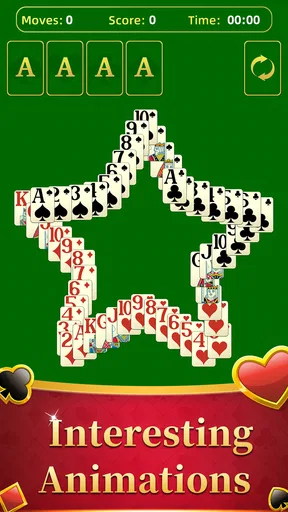
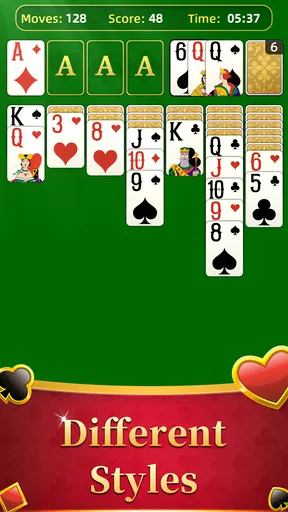
 Analysis by AppCompare
I approached Royal Solitaire expecting a familiar card game rather than a dramatic reinvention, and that turned out to be the right way to understand it. This is a free solitaire game for Android from Small ant limited, designed for the short, quiet sessions that make the genre so dependable. It is easy to pick up, easy to pause, and familiar enough that I never had to spend time learning complicated rules before playing.
That simplicity is also the main point of the experience. The game does not need a large cast, a long story, or a busy social system to be useful. Its appeal comes from turning a few spare minutes into a calm mental exercise. I found myself opening it while waiting for an appointment, winding down before bed, or taking a break from more demanding games. The best part is that each session can remain brief without feeling incomplete.
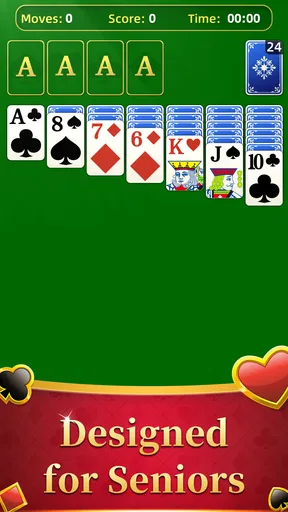
The presentation gives the classic card format a polished royal identity, but the cards remain the focus. I never felt that the visual theme was trying to distract me from the actual decisions. Instead, it frames the familiar solitaire routine with a little more character than a completely plain card table. That balance matters because a card game can quickly become tiring if decoration takes priority over readability.
How the royal presentation shapes the play
I find the royal styling most useful when it gives a familiar card table a little character without asking me to learn a new world or chase a separate goal. That makes the game easy to reach for in short breaks, though the restrained approach may feel too quiet if you want constant visual change. The next section looks more closely at how that presentation supports clear, deliberate play.
A clear first impression for casual players
The first thing I noticed was how quickly the game communicates its purpose. There is no need to understand a fictional setting or follow an introductory narrative. You arrive at a solitaire table, recognize the basic structure, and can begin making moves almost immediately. For someone who has played this kind of card game before, that directness is welcome. For a newcomer, it reduces the intimidation that can come from opening a game filled with unfamiliar menus.
The Royal Solitaire name suggests a courtly atmosphere, and the visual language follows that idea without turning the game into a role-playing experience. The cards and surrounding presentation give the session a more composed feeling than a purely utilitarian card app. I would describe the mood as relaxed and lightly decorative rather than grand or theatrical. That makes it suitable for players who want a little personality but still want the board to stay readable.
One practical advantage of this restrained approach is that the game fits naturally into everyday use. I do not need to remember a plot, maintain a collection, or prepare for a long challenge before enjoying it. A quick round can stand alone. If I stop halfway through a session, the experience does not feel interrupted in the same way a story-driven game might. That makes it particularly convenient for commuting, short breaks, and moments when my attention is limited.
Worth Reading Before You Choose

EA SPORTS FC Mobile 26 Is a Bigger Football Game, but It Takes Time

Flipboard Shows What News Apps Must Do Beyond the Feed

Switching to Android Auto Means Rethinking Your Driving Routine

Google Calendar Makes a Crowded Week Easier to Manage

Ludo King Makes the Most of the Minutes Between Plans

Baby Panda World Brings Quick Play to Modern Phones, but Its Game Library Feels Busy
There is a trade-off, though. Players looking for a deep progression system, a strong narrative setting, or a constantly changing visual spectacle may find the opening modest. The game’s first impression is built around familiarity, not surprise. I think that is a strength for traditional solitaire fans, but it also makes the app less appealing to anyone hoping for a card adventure with extensive content outside the table itself.
Art direction that supports concentration
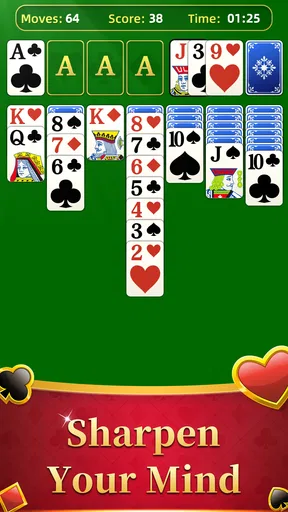
The artwork works best when I treat it as a frame for the cards rather than as the main attraction. A solitaire board needs visual separation between playable cards, foundations, and empty spaces. If the background is too loud or the card faces are too stylized, the player spends energy searching instead of planning. Here, the royal theme gives the game identity while leaving the essential card information at the center of the screen.
I also appreciate that a classic card layout does not require constant visual explanation. Once the board is visible, my attention naturally moves between possible moves, hidden cards, and the spaces where completed suits belong. That creates a quiet visual rhythm: scan the tableau, identify a useful move, make it, and scan again. The presentation supports that loop instead of competing with it.
This is one of the less obvious strengths of a traditional solitaire app. The artwork does not need to be spectacular to be effective. It needs to make repeated viewing comfortable. I may look at the same board for several minutes, so a coherent theme and readable arrangement matter more than a flashy opening animation. Royal Solitaire understands that the table is something I inspect repeatedly, not just a screen I glance at once.
For older phones or players who prefer straightforward interfaces, that clarity can be more valuable than elaborate effects. The game supports Android devices running version 7.0 or later, which gives it a broad reach across compatible phones. I would still recommend checking how comfortable the card size feels on a smaller display before committing to long sessions, because solitaire depends on being able to distinguish suits and ranks without strain.
Sound and the pace of a quiet card session
Sound is not the reason I would choose this game, but it is part of how a solitaire app establishes its mood. In this type of experience, audio should reinforce the feeling of placing cards rather than demand attention. The game’s overall character works best when I let the visual table and the small decisions carry the session. It is the kind of game I can imagine playing while keeping the volume low, especially in a shared room or during a short evening break.
That low-pressure quality is important because solitaire already has a natural rhythm. The player studies the board, commits to a move, and then reassesses the new arrangement. A busy soundtrack would work against that pattern. A calmer presentation leaves room for the satisfying sounds and pauses associated with each card movement, while also making it easy to play silently when necessary.
I found this pacing more useful than a constant stream of rewards. Every move does not need to trigger a celebration. In fact, too much feedback would make the game feel restless. Royal Solitaire is better suited to players who enjoy the small satisfaction of uncovering a card or opening a useful column gradually. The reward arrives through improved possibilities on the board, not through a loud interruption after every action.
There is a limitation here for players who need strong audiovisual variety to stay engaged. A classic solitaire structure can become repetitive, and a restrained mood will not solve that by itself. If you prefer rapid rounds, dramatic effects, or a constantly changing challenge screen, a more arcade-focused card game may hold your attention better. This game’s pacing is deliberately steady, and that is either its comfort or its weakness depending on what you want from a mobile game.
Why the setting fits the mechanics
The royal framing makes sense because solitaire has always carried a formal, almost ceremonial feeling. Cards are arranged in ordered spaces, suits are built carefully, and each move can either open the board or reduce future options. The theme adds a sense of occasion to those actions without changing the basic mental task. I never felt that the setting was forcing an unrelated story onto a simple card puzzle.
That coherence helps the game avoid a common problem in mobile design: a decorative theme that has no relationship to the activity. Here, the courtly identity suits the orderly layout and the patient pace. The player is not rushing through a battlefield or managing a noisy city. The focus stays on arrangement, sequence, and controlled progress. Even when a deal becomes difficult, the mood remains more thoughtful than stressful.
The result is a game that works well as a quiet reset. When I have been switching between messages, work tasks, and notifications, a solitaire board gives my attention one manageable problem. I can look for a move without needing to make a major commitment. The royal presentation reinforces that change of pace by making the session feel separate from the clutter of ordinary phone use.
Where the classic rules remain the main attraction
Royal Solitaire belongs firmly to the classic card-game category, and that is important when setting expectations. Its strength is not that it transforms solitaire into something unrecognizable. Its strength is that it keeps the familiar structure available in a mobile format. Players who already know the basic objective can concentrate on planning instead of learning a new system.
The central decisions are more interesting than they first appear. A move that exposes a hidden card may be more valuable than one that immediately fills a foundation. Empty spaces can create opportunities, but using them too early can also limit the board. I often found that the best move was not the most obvious legal move. It was the one that preserved flexibility for the next few turns.
That is where the game becomes more than a way to pass time. It rewards looking ahead, especially when several cards seem playable. I recommend taking a moment before moving a card automatically. Ask whether the move opens a new card, frees a column, or simply shifts the same information around. This small habit makes the sessions more thoughtful and can reduce the frustration of reaching an awkward position later.
Another useful approach is to delay foundation moves when they would remove a card that could still help organize the tableau. New players often treat every available foundation move as automatically good. In practice, keeping certain cards available can preserve more options. I found this especially helpful when deciding whether to build upward immediately or first rearrange the lower cards.
Small workflows that make short sessions better
My preferred way to play is to begin with a quick board scan rather than tapping the first available move. I look for cards that reveal hidden information, identify any immediate sequences, and note whether an empty column can be created safely. This takes only a few seconds, but it changes the experience from random card movement into a more deliberate puzzle.
For a short break, I use a simple stopping rule: if the board reaches a point where every move is being made without a clear reason, I pause instead of forcing the session. That keeps the game relaxing. Solitaire can become irritating when I continue only because I feel obligated to finish. Since the app is free to start, there is no reason to turn a five-minute distraction into a frustrating obligation.
For longer sessions, I pay attention to the order in which I uncover information. A hidden card is not just another card; it is a piece of the board that may change the value of every later move. I try to prioritize moves that reveal unknowns while preserving at least one route for rearranging the visible cards. This is a more reliable workflow than chasing immediate foundation progress.
These habits are useful because they do not depend on a complicated feature set. They come directly from the way the board presents choices. The game’s value is in giving those choices enough space to matter. If you approach it as a reflex game, it may feel plain. If you approach it as a compact planning exercise, the classic format has more depth than the simple appearance suggests.
Who will enjoy it, and who should look elsewhere
I would recommend Royal Solitaire to someone who wants a familiar card game that can be opened without preparation. It suits players who enjoy quiet concentration, traditional rules, and sessions that can end after a few minutes. It is also a sensible choice for people who prefer a lightly themed table over a completely bare interface, provided they do not expect the theme to become a full story or adventure.
The game is rated for Everyone, which matches its approachable format. That does not mean every player will enjoy it equally. Younger players who want fast action may find the pace too measured, while experienced solitaire players seeking unusual variants may want more novelty. It is also not the best fit for anyone whose main priority is multiplayer competition, social interaction, or a large collection of unrelated card modes.
Compared with playing solitaire through a generic browser page, a dedicated app feels more convenient because the experience is always close at hand and shaped around mobile use. Compared with a heavily gamified solitaire alternative, Royal Solitaire feels less demanding and less cluttered. The trade-off is that a more feature-packed competitor may offer stronger long-term incentives, broader customization, or more varied challenges. I would choose this one for calm repetition, not for an endless stream of new systems.
The developer, Small ant limited, has positioned the game as a straightforward mobile card experience rather than an expensive premium product. It is free to download, while optional in-app purchases range from around five dollars to around eleven dollars per item. That makes it easy to try without an upfront payment, but I would still advise checking purchase prompts carefully if you are handing the phone to a child or prefer to keep every part of a casual game free.
What the numbers suggest about its place on mobile
The game has reached over a million installs and holds a 4.6 average from around three thousand ratings, with more than a hundred written reviews. Those figures suggest that its familiar approach has found a substantial audience. I would not treat popularity as proof that it is the right solitaire game for everyone, but it does indicate that the basic presentation and card format are resonating with many players.
The current version is 2.20.1, and the app was released on January 17, 2024. For someone deciding whether to try it, the more useful takeaway is that this is an established mobile release rather than a concept built around a short promotional description. I would still judge it by your own preferences: a strong rating cannot replace the need for a comfortable card layout, a suitable pace, and a willingness to play a traditional format.
Because it is free, the main decision is not whether the initial download is worth paying for. It is whether the calm, classic structure deserves space on your phone. If you already know that solitaire helps you relax, the low barrier makes trying it easy. If you need constant progression or competitive pressure, the free entry point will not change the fact that the underlying loop remains deliberately simple.
The atmosphere verdict after repeated play
After spending time with Royal Solitaire, I see its identity as a combination of familiar mechanics, a composed visual theme, and an unhurried mood. The art direction gives the card table a distinct personality without burying the information I need. The setting feels connected to the orderly nature of solitaire, while the pacing leaves enough room for planning instead of turning every move into a race.
Its strongest quality is consistency. The presentation, the classic card structure, and the short-session format all point in the same direction. I can use it as a small mental break, a way to settle down before sleep, or a low-pressure activity while waiting. The game does not promise a huge world, and it does not need one to be useful.
Its main weakness is the same simplicity that makes it approachable. Players who want dramatic sound, elaborate progression, multiplayer competition, or frequent mechanical surprises should choose a different card game. Even experienced solitaire fans may eventually want more variation than this focused format provides. I would also keep the optional purchase range in mind if you prefer a completely distraction-free free-to-play experience.
For me, the best reason to install it is not novelty but reliability. When I want a recognizable puzzle with a little royal atmosphere and no long commitment, this game fits naturally. I would recommend it to casual card players, traditional solitaire fans, and anyone looking for a quiet mobile routine. If that sounds like your kind of session, the free download makes Royal Solitaire an easy one to try.
Pros
- Classic solitaire rules are easy to learn and suitable for quick sessions.
- Smooth card controls make dragging and placing cards feel responsive.
- Works well for casual play without requiring advanced strategy.
- Clear card layouts make possible moves easy to identify.
- The game is relaxing and can be played at your own pace.
Cons
- Advertising may interrupt play or appear frequently between rounds.
- Some features may be limited unless you purchase the premium option.
- Replay value can feel limited for players seeking more game modes.
- Random deals may occasionally produce frustrating or unsolvable hands.
- The interface may feel too simple for experienced solitaire fans.
FAQs for Royal Solitaire
What is Royal Solitaire, and how is the game played?
Royal Solitaire is a classic card game built around familiar solitaire rules, usually requiring you to arrange cards in ascending order by suit while organizing the tableau in alternating colors. The app is designed for short, relaxing sessions, although the exact objectives, layouts, and available modes may vary. New players should expect a straightforward experience focused on strategy, patience, and careful card planning.
Is Royal Solitaire free to download and play?
Royal Solitaire can generally be downloaded without an upfront purchase, allowing users to begin playing at no cost. However, free versions of solitaire games may include advertising, optional in-app purchases, or paid features such as ad removal, extra hints, special card designs, or additional game modes. Before downloading, check the store listing carefully to understand the current pricing, advertising policy, and available purchases.
Does Royal Solitaire require an internet connection?
For basic solitaire gameplay, Royal Solitaire may be usable without a constant internet connection, which makes it convenient for travel, commuting, or playing when mobile data is limited. Nevertheless, certain features can require online access, including advertisements, cloud synchronization, leaderboards, account services, updates, or purchases. Availability may differ between Android and iOS, so offline functions should be confirmed on your device.
Are there advertisements or in-app purchases in Royal Solitaire?
Many free solitaire applications support development through advertisements and optional in-app purchases, and Royal Solitaire may follow the same model depending on the version and platform. Ads can appear between games, after completing a round, or when requesting hints. Purchases may provide an ad-free experience or cosmetic and convenience features. Review the app’s store information and payment settings before allowing transactions.
Is Royal Solitaire suitable for beginners and casual players?
Royal Solitaire is generally suitable for beginners because solitaire rules are easy to understand, while the gameplay gradually encourages better planning and decision-making. Casual players can enjoy individual rounds without committing to a long session, and experienced users may appreciate trying to improve their completion rate or time. If the app includes hints, undo controls, tutorials, or adjustable settings, these can make the learning process more comfortable.


